Popular Reading Lists
Must Reads
Reading Lists
Most recommended
The books that show up on the most lists.
New York Times Readers’ Pick: Top 100 Books of the 21st Century
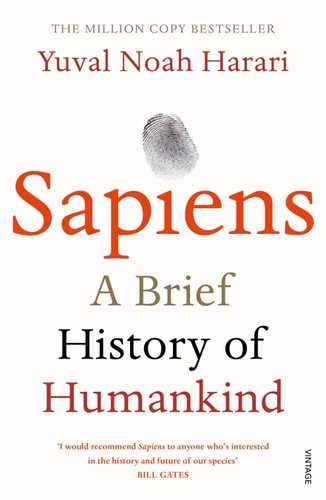
The tenth anniversary edition of the internationally bestselling phenomenon that cemented Yuval Noah Harari as one of the most prominent historians of our time—featuring a new afterword from the author.
One hundred thousand years ago, at least six human species inhabited the earth. Today there is just one. Us. Homo sapiens. How did our species succeed in the battle for dominance? Why did our foraging ancestors come together to create cities and kingdoms? How did we come to believe in gods, nations, and human rights; to trust money, books, and laws; and to be enslaved by bureaucracy, timetables, and consumerism? And what will our world be like in the millennia to come?
In Sapiens, Professor Yuval Noah Harari spans the whole of human history, from the very first humans to walk the earth to the radical—and sometimes devastating—breakthroughs of the Cognitive, Agricultural, and Scientific Revolutions. Drawing on insights from biology, anthropology, paleontology, and economics, and incorporating full-color illustrations throughout the text, he explores how the currents of history have shaped our human societies, the animals and plants around us, and even our personalities. Can we ever free our behavior from the legacy of our ancestors? And what, if anything, can we do to influence the course of the centuries to come?
Bold, wide-ranging, and provocative, Sapiens integrates history and science to challenge everything we thought we knew about being human: our thoughts, our actions, our heritage...and our future.
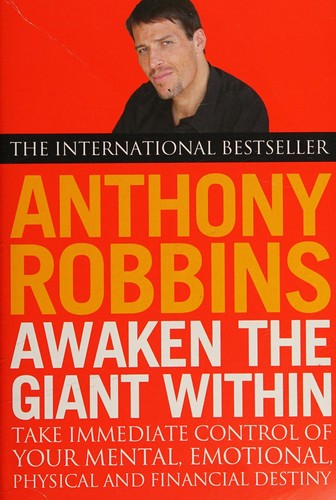
Wake up and take control of your life!
One reason so few of us achieve what we truly want in life is that we never direct our focus; we never concentrate our power. But there is unlimited power that lies dormant within us all. We all have a sleeping giant within us. Each of us have our own bit of genius just waiting to be tapped. It might be a talent for art or music. It might be empathy. It might be innovating or business acumen. Most people are unaware of the untapped potential we can immediately command when we concentrate all our resources on mastering a single area of our lives.
With four million copies sold, this new edition of Awaken the Giant Within serves as a powerful wakeup call for a new generation of readers. Robbins helps you raise your standards, change the core beliefs that hold you back, and provides strategies for quickly producing the results you desire.
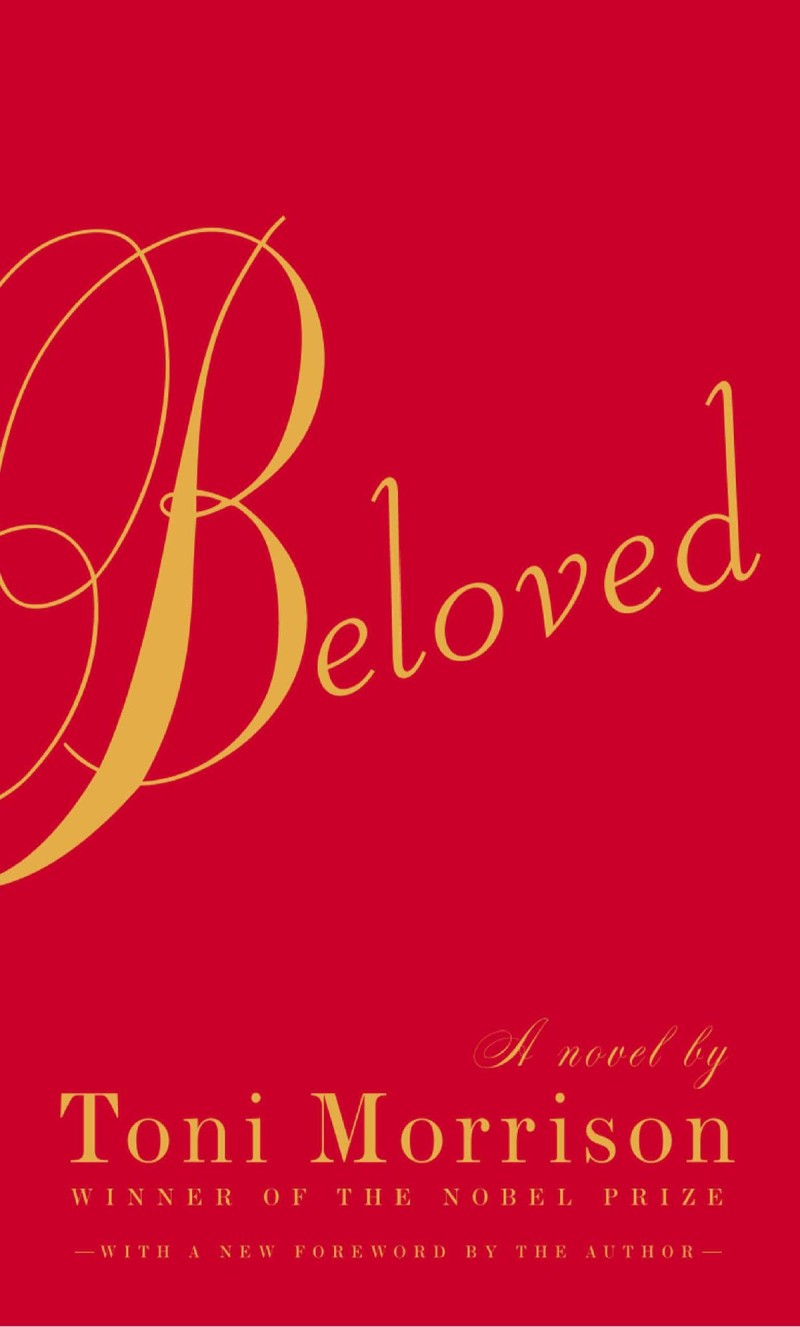
“A masterwork.... Wonderful.... I can’t imagine American literature without it.” —John Leonard, Los Angeles Times
Sethe was born a slave and escaped to Ohio, but eighteen years later she is still not free. Sethe has too many memories of Sweet Home, the beautiful farm where so many hideous things happened. And Sethe’s new home is haunted by the ghost of her baby, who died nameless and whose tombstone is engraved with a single word: Beloved.
“Dazzling. . . . Magical. . . . An extraordinary work.” —The New York Times
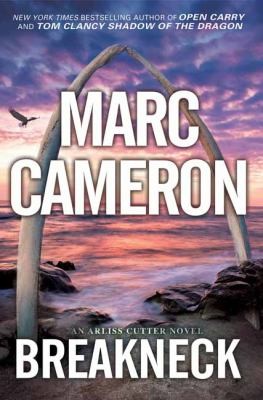
NEW YORK TIMES BESTSELLER
Shortlisted for the Financial Times and Schroders Business Book of the Year Award
One of The New Yorker's Best Books of the Year • One of NPR's "Books We Love" of 2025 • A Financial Times Best Book of the Year • An August 2025 Next Big Idea Club Must-Read Book • One of Bookbub's Best Nonfiction of 2025 • A China Books Review Best Book of 2025 • An Inc. Best Business Book of 2025
A riveting, firsthand investigation of China’s seismic progress, its human costs, and what it means for America.
For close to a decade, technology analyst Dan Wang—“a gifted observer of contemporary China” (Ross Douthat)—has been living through the country’s astonishing, messy progress. China’s towering bridges, gleaming railways, and sprawling factories have improved economic outcomes in record time. But rapid change has also sent ripples of pain throughout the society. This reality—political repression and astonishing growth—is not a paradox, but rather a feature of China’s engineering mindset.
In Breakneck, Wang blends political, economic, and philosophical analysis with reportage to reveal a provocative new framework for understanding China—one that helps us see America more clearly, too. While China is an engineering state, relentlessly pursuing megaprojects, the United States has stalled. America has transformed into a lawyerly society, reflexively blocking everything, good and bad.
Blending razor-sharp analysis with immersive storytelling, Wang offers a gripping portrait of a nation in flux. Breakneck traverses metropolises like Shanghai, Chongqing, and Shenzhen, where the engineering state has created not only dazzling infrastructure but also a sense of optimism. The book also exposes the downsides of social engineering, including the surveillance of ethnic minorities, political suppression, and the traumas of the one-child policy and zero-Covid.
In an era of animosity and mistrust, Wang unmasks the shocking similarities between the United States and China. Breakneck reveals how each country points toward a better path for the other: Chinese citizens would be better off if their government could learn to value individual liberties, while Americans would be better off if their government could learn to embrace engineering—and to produce better outcomes for the many, not just the few.
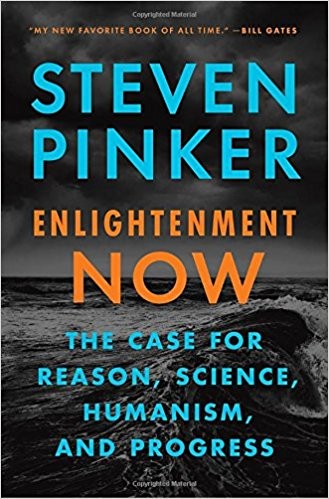
A NEW YORK TIMES NOTABLE BOOK OF 2018
ONE OF THE ECONOMIST'S BOOKS OF THE YEAR
If you think the world is coming to an end, think again: people are living longer, healthier, freer, and happier lives, and while our problems are formidable, the solutions lie in the Enlightenment ideal of using reason and science. By the author of the new book, Rationality.
Is the world really falling apart? Is the ideal of progress obsolete? In this elegant assessment of the human condition in the third millennium, cognitive scientist and public intellectual Steven Pinker urges us to step back from the gory headlines and prophecies of doom, which play to our psychological biases. Instead, follow the data: In seventy-five jaw-dropping graphs, Pinker shows that life, health, prosperity, safety, peace, knowledge, and happiness are on the rise, not just in the West, but worldwide. This progress is not the result of some cosmic force. It is a gift of the Enlightenment: the conviction that reason and science can enhance human flourishing.
Far from being a naïve hope, the Enlightenment, we now know, has worked. But more than ever, it needs a vigorous defense. The Enlightenment project swims against currents of human nature--tribalism, authoritarianism, demonization, magical thinking--which demagogues are all too willing to exploit. Many commentators, committed to political, religious, or romantic ideologies, fight a rearguard action against it. The result is a corrosive fatalism and a willingness to wreck the precious institutions of liberal democracy and global cooperation.
With intellectual depth and literary flair, Enlightenment Now makes the case for reason, science, and humanism: the ideals we need to confront our problems and continue our progress.
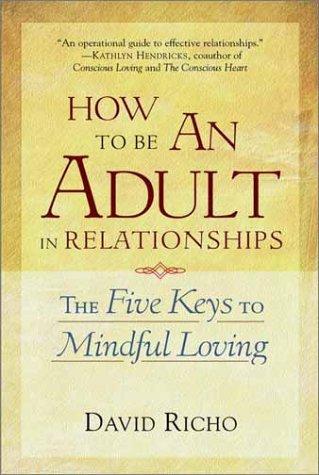
1. Attention to the present moment; observing, listening, and noticing all the feelings at play in our relationships.
2. Acceptance of ourselves and others just as we are.
3. Appreciation of all our gifts, our limits, our longings, and our poignant human predicament.
4. Affection shown through holding and touching in respectful ways.
5. Allowing life and love to be just as they are, with all their ecstasy and ache, without trying to take control.
When deeply understood and applied, these five simple concepts—what Richo calls the five A's—form the basis of mature love. They help us to move away from judgment, fear, and blame to a position of openness, compassion, and realism about life and relationships. By giving and receiving these five A's, relationships become deeper and more meaningful, and they become a ground for personal transformation.
The World’s Most Influential Book on Personal Success
The bestselling classic that made Systems Over Goals, Talent Stacking, and Passion Is Overrated universal success advice has been reborn.
Once in a generation, a book revolutionizes its category and becomes the preeminent reference that all subsequent books on the topic must pay homage to, in name or in spirit.
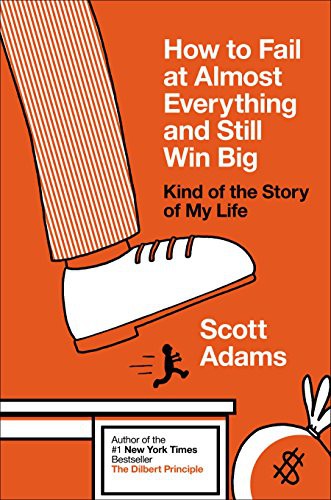
How to Fail at Almost Everything and Still Win Big by Scott Adams, creator of Dilbert, is such a book for the field of personal success.
A contrarian pundit and persuasion expert in a class of his own, Adams has reached hundreds of millions directly and indirectly through the 2013 first edition’s straightforward yet counterintuitive advice—to invite failure in, embrace it, then pick its pocket.
The second edition of How to Fail is a tighter, updated version, by popular demand. Yet new and returning readers alike will find the same candor, humor, and timeless wisdom on productivity, career growth, health and fitness, and entrepreneurial success as the original classic.
How to Fail at Almost Everything and Still Win Big, Second Edition is the essential read (or re-read) for anyone who wants to find a unique path to personal victory—and make luck find you in whatever you do.