Must Reads

Books Bill Gates has publicly recommended. Compiled from his annual reading lists — not written by him.
Must read before you die

Must Reads 

Books Bill Gates has publicly recommended. Compiled from his annual reading lists — not written by him.

10 books
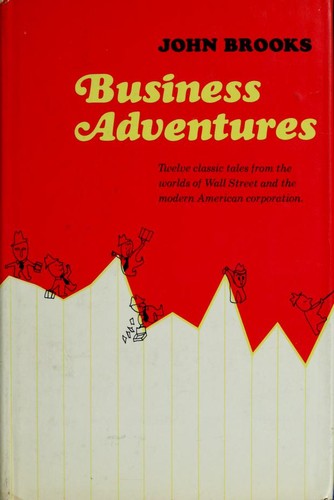
Business Adventures
Business Adventures
John Brooks
'The best business book I've ever read.' Bill Gates, Wall Street Journal 'The Michael Lewis of his day.' New York Times What do the $350 million Ford Motor Company disaster known as the Edsel, the fast and incredible rise of Xerox, and the unbelievable scandals at General Electric and Texas Gulf Sulphur have in common? Each is an example of how an iconic company was defined by a particular moment of fame or notoriety. These notable and fascinating accounts are as relevant today to understanding the intricacies of corporate life as they were when the events happened. Stories about Wall Street are infused with drama and adventure and reveal the machinations and volatile nature of the world of finance. John Brooks's insightful reportage is so full of personality and critical detail that whether he is looking at the astounding market crash of 1962, the collapse of a well-known brokerage firm, or the bold attempt by American bankers to save the British pound, one gets the sense that history really does repeat itself. This business classic written by longtime New Yorker contributor John Brooks is an insightful and engaging look into corporate and financial life in America.
2015464 pagesOpen Road Media
Business Adventures
John Brooks
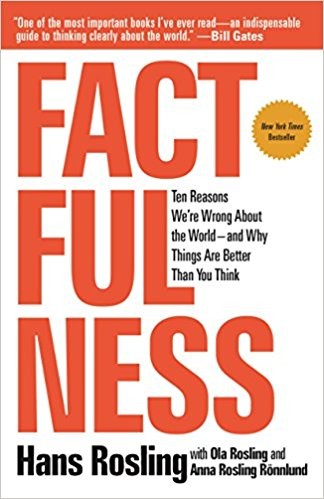
Factfulness
Factfulness
Hans Rosling
The international best-selling phenomenon loved by BARACK OBAMA and BILL GATES in a new and updated illustrated edition 'A hopeful book about the potential for human progress when we work off facts rather than our inherent biases.' BARACK OBAMA 'One of the most important books I've ever read - an indispensable guide to thinking clearly about the world.' BILL GATES *#1 Sunday Times bestseller * instant New York Times bestseller * Observer 'best brainy book of the decade' * #1 Wall Street Journal bestseller * Irish Times bestseller * Audio bestseller * Guardian bestseller * FACTFULNESS: the stress-reducing habit of only having opinions for which there are strong supporting facts. Things aren't as bad as we think. Fact. When asked simple questions about global trends - why the world's population is increasing; how many young women go to school; how many of us live in poverty - we systematically get the answers wrong. So wrong that a chimpanzee choosing answers at random will consistently outguess journalists, Nobel laureates, and investment bankers. In Factfulness, legendary statisticians Hans, Anna and Ola Rosling offer a radical new explanation of why this happens, and reveal the ten instincts that distort our perspective. It turns out that the world, for all its imperfections, is in a much better state than we might think. But when we let the bad news take on outsize proportions instead of embracing a worldview based on facts, we can lose our ability to focus on the things that threaten us most. Inspiring and revelatory, filled with lively anecdotes and moving stories, Factfulness is an urgent and essential book that will change the way you see the world.
2019392 pagesHachette UK
Factfulness
Hans Rosling
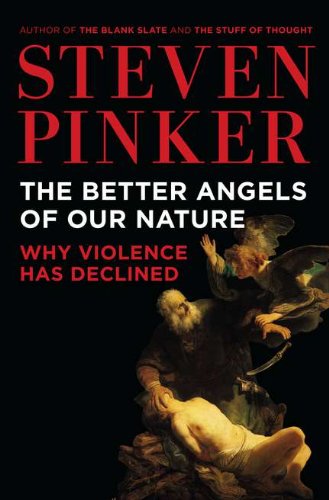
The Better Angels of Our Nature
Steven Pinker
“If I could give each of you a graduation present, it would be this—the most inspiring book I've ever read." —Bill Gates (May, 2017) Selected by The New York Times Book Review as a Notable Book of the Year The author of Rationality and Enlightenment Now offers a provocative and surprising history of violence. Faced with the ceaseless stream of news about war, crime, and terrorism, one could easily think we live in the most violent age ever seen. Yet as New York Times bestselling author Steven Pinker shows in this startling and engaging new work, just the opposite is true: violence has been diminishing for millenia and we may be living in the most peaceful time in our species's existence. For most of history, war, slavery, infanticide, child abuse, assassinations, programs, gruesom punishments, deadly quarrels, and genocide were ordinary features of life. But today, Pinker shows (with the help of more than a hundred graphs and maps) all these forms of violence have dwindled and are widely condemned. How has this happened? This groundbreaking book continues Pinker's exploration of the esesnce of human nature, mixing psychology and history to provide a remarkable picture of an increasingly nonviolent world. The key, he explains, is to understand our intrinsic motives--the inner demons that incline us toward violence and the better angels that steer us away--and how changing circumstances have allowed our better angels to prevail. Exploding fatalist myths about humankind's inherent violence and the curse of modernity, this ambitious and provocative book is sure to be hotly debated in living rooms and the Pentagon alike, and will challenge and change the way we think about our society.
20111052 pagesPenguin
The Better Angels of Our Nature
Steven Pinker
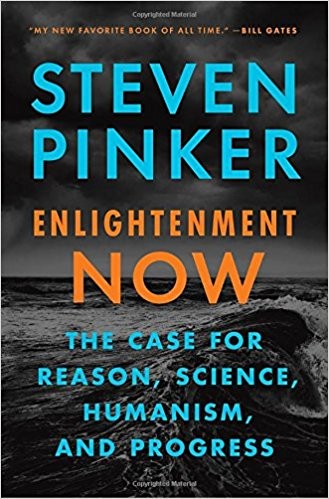
Enlightenment Now
Enlightenment Now
Steven Pinker
INSTANT NEW YORK TIMES BESTSELLER
A NEW YORK TIMES NOTABLE BOOK OF 2018
ONE OF THE ECONOMIST'S BOOKS OF THE YEAR


If you think the world is coming to an end, think again: people are living longer, healthier, freer, and happier lives, and while our problems are formidable, the solutions lie in the Enlightenment ideal of using reason and science. By the author of the new book, Rationality.

Is the world really falling apart? Is the ideal of progress obsolete? In this elegant assessment of the human condition in the third millennium, cognitive scientist and public intellectual Steven Pinker urges us to step back from the gory headlines and prophecies of doom, which play to our psychological biases. Instead, follow the data: In seventy-five jaw-dropping graphs, Pinker shows that life, health, prosperity, safety, peace, knowledge, and happiness are on the rise, not just in the West, but worldwide. This progress is not the result of some cosmic force. It is a gift of the Enlightenment: the conviction that reason and science can enhance human flourishing.

Far from being a naïve hope, the Enlightenment, we now know, has worked. But more than ever, it needs a vigorous defense. The Enlightenment project swims against currents of human nature--tribalism, authoritarianism, demonization, magical thinking--which demagogues are all too willing to exploit. Many commentators, committed to political, religious, or romantic ideologies, fight a rearguard action against it. The result is a corrosive fatalism and a willingness to wreck the precious institutions of liberal democracy and global cooperation.

With intellectual depth and literary flair, Enlightenment Now makes the case for reason, science, and humanism: the ideals we need to confront our problems and continue our progress.
2019577 pagesPenguin
Enlightenment Now
Steven Pinker
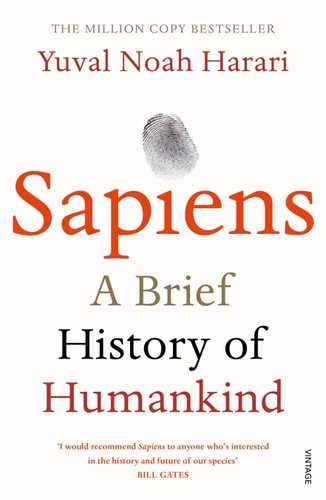
Sapiens
Sapiens
Yuval Noah Harari

New York Times Readers’ Pick: Top 100 Books of the 21st Century

The tenth anniversary edition of the internationally bestselling phenomenon that cemented Yuval Noah Harari as one of the most prominent historians of our time—featuring a new afterword from the author.

One hundred thousand years ago, at least six human species inhabited the earth. Today there is just one. Us. Homo sapiens. How did our species succeed in the battle for dominance? Why did our foraging ancestors come together to create cities and kingdoms? How did we come to believe in gods, nations, and human rights; to trust money, books, and laws; and to be enslaved by bureaucracy, timetables, and consumerism? And what will our world be like in the millennia to come?

In Sapiens, Professor Yuval Noah Harari spans the whole of human history, from the very first humans to walk the earth to the radical—and sometimes devastating—breakthroughs of the Cognitive, Agricultural, and Scientific Revolutions. Drawing on insights from biology, anthropology, paleontology, and economics, and incorporating full-color illustrations throughout the text, he explores how the currents of history have shaped our human societies, the animals and plants around us, and even our personalities. Can we ever free our behavior from the legacy of our ancestors? And what, if anything, can we do to influence the course of the centuries to come?

Bold, wide-ranging, and provocative, Sapiens integrates history and science to challenge everything we thought we knew about being human: our thoughts, our actions, our heritage...and our future.
2025594 pagesHarperCollins
Sapiens
Yuval Noah Harari
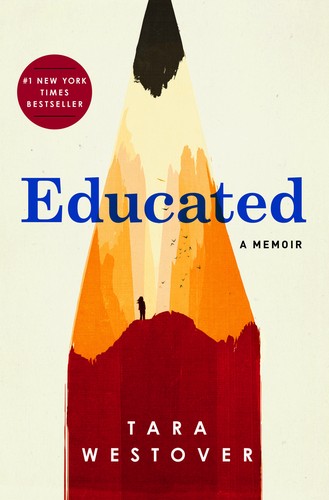
Educated
Educated
Tara Westover
#1 NEW YORK TIMES, WALL STREET JOURNAL, AND BOSTON GLOBE BESTSELLER • One of the most acclaimed books of our time: an unforgettable memoir about a young woman who, kept out of school, leaves her survivalist family and goes on to earn a PhD from Cambridge University “Extraordinary . . . an act of courage and self-invention.”—The New York Times NAMED ONE OF THE TEN BEST BOOKS OF THE YEAR BY THE NEW YORK TIMES BOOK REVIEW • ONE OF BARACK OBAMA’S FAVORITE BOOKS OF THE YEAR • A KIRKUS REVIEWS BEST NONFICTION BOOK OF THE CENTURY • FINALIST: National Book Critics Circle’s Award In Autobiography and John Leonard Prize For Best First Book • PEN/Jean Stein Book Award • Los Angeles Times Book Prize Born to survivalists in the mountains of Idaho, Tara Westover was seventeen the first time she set foot in a classroom. Her family was so isolated from mainstream society that there was no one to ensure the children received an education, and no one to intervene when one of Tara’s older brothers became violent. When another brother got himself into college, Tara decided to try a new kind of life. Her quest for knowledge transformed her, taking her over oceans and across continents, to Harvard and to Cambridge University. Only then would she wonder if she’d traveled too far, if there was still a way home. “Beautiful and propulsive . . . Despite the singularity of [Westover’s] childhood, the questions her book poses are universal: How much of ourselves should we give to those we love? And how much must we betray them to grow up?”—Vogue ONE OF THE BEST BOOKS OF THE YEAR: The Washington Post, O: The Oprah Magazine, Time, NPR, Good Morning America, San Francisco Chronicle, The Guardian, The Economist, Financial Times, Newsday, New York Post, theSkimm, Refinery29, Bloomberg, Self, Real Simple, Town & Country, Bustle, Paste, Publishers Weekly, Library Journal, LibraryReads, Book Riot, Pamela Paul, KQED, New York Public Library
2018353 pagesRandom House
Educated
Tara Westover
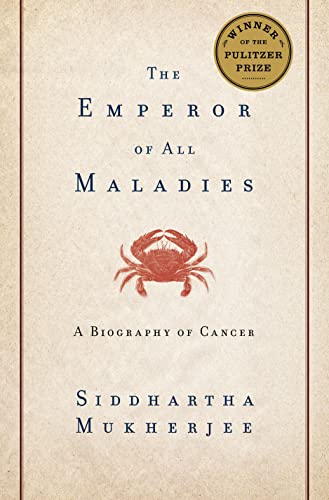
The Emperor of All Maladies
Siddhartha Mukherjee

WINNER OF THE GUARDIAN FIRST BOOK AWARD 2011

WINNER OF THE PULITZER PRIZE FOR NON-FICTION 2011

'Profound, eloquent and searching' SUNDAY TIMES

'Essential reading' INDEPENDENT

'Masterly' GUARDIAN

'Extraordinary' NEW YORK TIMES BOOK REVIEW

AN OBSERVER BEST BOOK OF THE CENTURY SO FAR

Riveting, audacious and now more urgent than ever in this vast update, The Emperor of All Maladies is a masterpiece.

The story of cancer is a human one - a tale of chance discoveries, seized opportunities and human endurance. From innovative early surgeries to the Curies' ultimately tragic work with radiation; from Sidney Farber's hugely risky discovery of chemotherapy to the author's treatment of his own patients, The Emperor of All Maladies is a profound and revelatory portrait of an enigmatic disease humans have lived with, and perished from, for more than five thousand years.

In this updated edition of Siddhartha Mukherjee's instant classic, four new chapters reveal what has changed in the universe of cancer in the years since the book was first published. With moving eloquence, he offers an insight into our evolving understanding of cancer's causes and the emerging, revolutionary new treatments that might shape its future, including those that Mukherjee himself has helped devise.

'This elegantly written overview allows us to look a once whispered-about illness squarely in the eye' INDEPENDENT

'The notion of "popular science" doesn't come close to describing this achievement. It is literature' OBSERVER
20250 pagesFourth Estate
The Emperor of All Maladies
Siddhartha Mukherjee
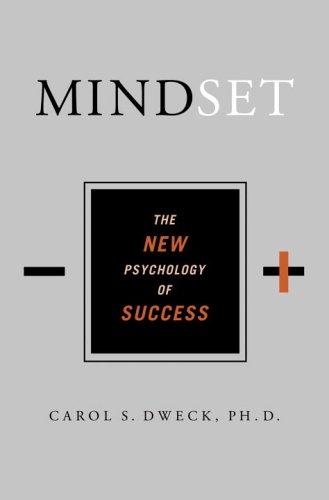
Mindset
Mindset
Carol S. Dweck
DISCOVER THE MINDSET FOR ACHIEVING SUCCESS World-renowned Stanford University psychologist Carol Dweck, in decades of research on achievement and success, has discovered a truly groundbreaking idea - the power of our mindset. Professor Dweck explains why it's not just our abilities and talent that bring us success - but whether we approach our goals with a fixed or growth mindset. With the right mindset, we can motivate our children to raise their grades, as well as reaching our own goals - both personal and professional. Mindset reveals what all great parents, teachers, CEOs and athletes already know: how a simple idea about the brain can foster learning and nurture the resilience that is the basis of accomplishment in every area. This revised and updated edition includes new material on organisational mindsets and on opening yourself up to growth, and addresses common misconceptions about growth mindsets.
2017329 pagesHachette UK
Mindset
Carol S. Dweck
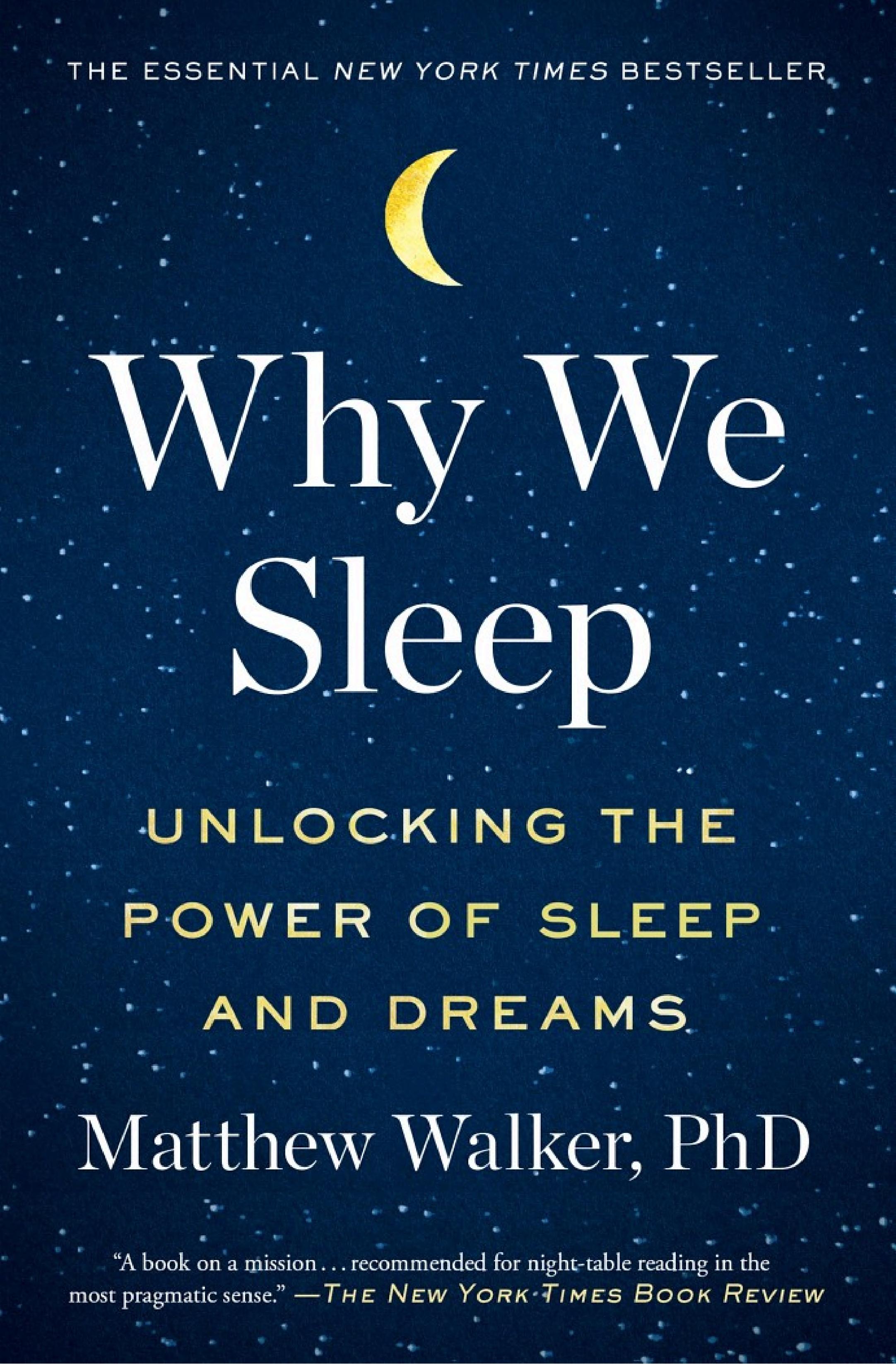
Why We Sleep
Why We Sleep
Matthew Walker
"The first sleep book by a leading scientific expert--Professor Matthew Walker, Director of UC Berkeley's Sleep and Neuroimaging Lab--reveals his groundbreaking exploration of sleep, explaining how we can harness its transformative power to change our lives for the better. Sleep is one of the most important but least understood aspects of our life, wellness, and longevity. Until very recently, science had no answer to the question of why we sleep, or what good it served, or why we suffer such devastating health consequences when we don't sleep. Compared to the other basic drives in life--eating, drinking, and reproducing--the purpose of sleep remained elusive. An explosion of scientific discoveries in the last twenty years has shed new light on this fundamental aspect of our lives. Now, preeminent neuroscientist and sleep expert Matthew Walker gives us a new understanding of the vital importance of sleep and dreaming. Within the brain, sleep enriches our ability to learn, memorize, and make logical decisions. It recalibrates our emotions, restocks our immune system, fine-tunes our metabolism, and regulates our appetite. Dreaming mollifies painful memories and creates a virtual reality space in which the brain melds past and present knowledge to inspire creativity. Walker answers important questions about sleep: how do caffeine and alcohol affect sleep? What really happens during REM sleep? Why do our sleep patterns change across a lifetime? How do common sleep aids affect us and can they do long-term damage? Charting cutting-edge scientific breakthroughs, and synthesizing decades of research and clinical practice, Walker explains how we can harness sleep to improve learning, mood, and energy levels; regulate hormones; prevent cancer, Alzheimer's, and diabetes; slow the effects of aging; increase longevity; enhance the education and lifespan of our children, and boost the efficiency, success, and productivity of our businesses. Clear-eyed, fascinating, and accessible, Why We Sleep is a crucial and illuminating book"--Provided by publisher.
20180 pagesAllan Lane
Why We Sleep
Matthew Walker
The Great Gatsby
The Great Gatsby
F. Scott Fitzgerald
The Great Gatsby
F. Scott Fitzgerald